
Some women spend decades believing there is something fundamentally wrong with them. No matter how much they achieve, how much they give, or how many people praise them, they still carry a quiet emptiness inside.
They overwork, overgive, become everyone’s caretaker, and spend years chasing success, love, approval, and validation, hoping that one day they will finally feel enough. But they never do.
The reason often has nothing to do with who they are. It has everything to do with who raised them.
Growing up with a narcissistic mother, especially when combined with an emotionally absent, physically absent, or passive father, can shape a little girl into a woman who doesn’t know who she is outside of pleasing others.
Instead of growing into her natural feminine energy, where she feels safe, loved, joyful, creative, relaxed, and worthy simply because she exists, she learns that love must be earned.
She learns that her value depends on what she does for other people rather than who she is.
Over time, she stops listening to herself and starts measuring her worth through the reactions of everyone around her.
The Little Girl Who Never Felt Seen
Every child enters the world believing that her parents will love her simply because she exists. A healthy mother delights in her child.
She comforts her when she cries, celebrates her achievements, encourages her individuality, and creates a safe emotional space where her daughter feels accepted.
Through this relationship, a little girl learns that she matters, that she is lovable, and that she is enough exactly as she is.
When the mother is narcissistic, however, that mirror becomes distorted. Instead of being loved for who she is, the daughter is valued only for what she provides. She may become the “good girl,” the peacekeeper, the therapist, the emotional support system, the overachiever, or the invisible child who never asks for anything.
Love becomes conditional, approval becomes inconsistent, and affection is often given only when the daughter serves her mother’s emotional needs.
Instead of asking, “Who am I?” the little girl begins asking, “What do I need to become so someone will love me?” That question quietly follows her into adulthood.
The Missing Father
When a father is emotionally unavailable, physically absent, passive, or unwilling to protect his daughter from an unhealthy family dynamic, another painful message is absorbed: no one is coming. There is no safe adult. No one will protect me.
Many women respond by becoming fiercely independent. They tell themselves they don’t need anyone and pride themselves on handling everything alone. While independence can be a strength, in these situations it often develops as a survival strategy rather than a genuine choice.
Deep down, these women didn’t want to become independent because they loved carrying the weight of the world. They became independent because they had no other option.
What they truly wanted was to feel protected, supported, and emotionally safe. Instead, they learned that if they wanted something done, they had to do it themselves.
Living in Survival Instead of Feminine Energy
People often misunderstand feminine energy. It isn’t about weakness, dependence, or waiting for someone else to rescue you.
Healthy feminine energy is about feeling safe enough to enjoy life. It is the ability to receive, to trust yourself, to create, to laugh, to rest, to love, and to experience joy without constantly feeling that you have to earn it.
A woman who grows up fighting for love often never experiences this. Instead, she lives in constant masculine survival energy.
She is always planning, fixing problems, proving herself, working harder, anticipating everyone else’s needs, preventing conflict, and trying to earn her place. Even when she achieves success, her nervous system rarely relaxes because survival has become her identity.
The Addiction to Approval
One of the deepest wounds created by emotionally unhealthy parenting is believing that your worth exists outside yourself.
You become addicted to approval because approval temporarily fills the emptiness you have carried since childhood. Praise feels intoxicating, criticism feels devastating, and rejection feels almost unbearable.
You may overthink text messages, explain yourself excessively, apologize for taking up space, become hyperaware of everyone else’s emotions, or constantly change yourself to gain acceptance.
Yet no amount of approval ever truly satisfies because the original wound remains untouched. The little girl inside is still asking the same question she asked decades ago: “Am I enough now?”
The Great Awakening
Healing rarely begins when you find the perfect relationship, earn more money, or achieve another goal. Healing begins when you start questioning the story you have believed your entire life.
Why do I feel guilty for resting?
Why do I always put everyone else’s needs before my own?
Why do I panic whenever someone is disappointed in me?
Why do I believe I have to earn love?
Eventually, one realization changes everything: the problem was never you. The problem was the environment you adapted to.
That realization is both heartbreaking and liberating because if your beliefs were conditioned into you, they can also be replaced.
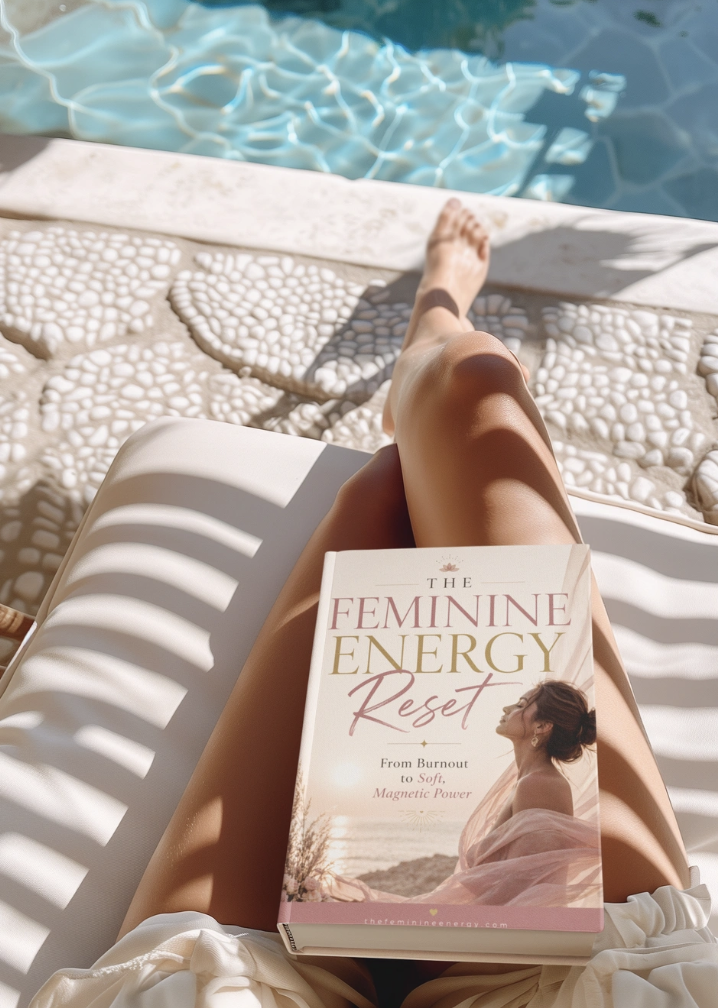
GET YOUR BOOK:
The Hardest Truth
One of the most painful parts of healing is accepting a truth that many daughters spend years trying to avoid. They continue hoping that one day their mother will finally become the loving parent they have always longed for.
They believe that if they explain themselves one more time, achieve one more success, or become just a little more lovable, everything will finally change.
Not every difficult parent is incapable of love, and every family is different. However, in families where there has been persistent emotional manipulation, exploitation, or abuse, many daughters eventually realize that the mother they have been waiting for simply does not exist.
Accepting this truth is incredibly painful because it means grieving someone who is still alive. It means letting go of the fantasy that one day she will suddenly understand your pain, apologise sincerely, or become emotionally available.
Some mothers are simply unable or unwilling to love in the healthy, nurturing way every child deserves.
For many women, true freedom begins when they stop seeing this person through the eyes of a little girl desperately searching for love. Instead, they begin seeing her clearly as she is.
They realise that throughout their childhood they were often treated more like an extension of their mother, a source of emotional supply, validation, or practical benefit, than as a separate human being with needs, feelings, and dreams of their own.
Seeing Her Clearly
Children naturally idealise their parents because their survival depends on believing their parents love them. As adults, however, we have another choice. We can stop judging people by their titles and start judging them by their behaviour.
Instead of thinking, “But she’s my mother,” you begin asking a different question: “If anyone else treated me this way, would I allow them to stay in my life?”
That question changes everything.
You stop making excuses. You stop minimising years of manipulation. You stop hoping that someone who repeatedly hurt you will suddenly become the person who heals you.
Most importantly, you stop believing that your healing depends on finally receiving their love or approval.
Reparenting Yourself
The woman who heals becomes the mother she always needed. She learns to speak kindly to herself instead of repeating the criticism she heard growing up.
She protects her own peace, celebrates her achievements, rests without guilt, sets healthy boundaries, and surrounds herself with emotionally healthy people.
Slowly, her nervous system learns a completely different reality. She begins to believe that she is safe, worthy, lovable, and deserving without having to prove herself.
She stops abandoning herself to keep everyone else comfortable and starts treating herself with the same compassion she gives so freely to others.
Many women also discover that they become the loving, nurturing mother their own children deserve. Instead of repeating the cycle, they consciously choose to break it.
When Anger Disappears
Many people think healing means forgiveness. Others think it means forgetting. In reality, one of the clearest signs of healing is often something much quieter: indifference.
You no longer feel consumed by anger because anger keeps you emotionally connected.
Instead, their words lose their power. Their opinions stop defining your choices. Their criticism no longer reaches your heart because you finally understand that it says far more about them than it ever did about you.
They become emotionally ordinary. Almost like a stranger.
You no longer carry them with you everywhere you go. They stop occupying space in your mind. You stop living in reaction to them and finally begin living for yourself.
Your Real Life Begins Here
The greatest tragedy of childhood emotional neglect is not only what happened to you. It is how long those experiences continue shaping your future long after childhood has ended.
The beautiful part is that this story does not have to define the rest of your life.
When you wake up to the truth, everything changes. You stop searching for your worth in achievements, relationships, money, or other people’s approval. You realise that your worth was never missing. It was simply buried beneath years of conditioning.
The little girl who believed she wasn’t enough was never broken. She was taught to believe she was.
As that conditioning falls away, your authentic self begins to emerge. You reconnect with the woman you were always meant to become.
She creates because she enjoys creating. She loves because her heart is open, not because she is trying to earn affection. She rests without shame, receives without guilt, laughs more easily, trusts herself, and no longer apologises for taking up space.
From this place, life begins to feel different. Whether you describe it as attracting better opportunities, manifesting your desires, or simply making healthier choices, your external world often starts reflecting the inner transformation that has taken place.
The emotional cord that kept you tied to your childhood finally breaks. The spell is lifted.
You no longer see yourself through your mother’s eyes. You see yourself through your own. You understand that your value has never depended on someone else’s ability to recognise it.
This is where your feminine energy naturally returns. It is no longer buried beneath years of fear, survival, and people-pleasing. You begin living from joy instead of obligation, from peace instead of anxiety, and from self-worth instead of approval.
You are no longer surviving.
You are finally living.
Your real life starts now.
Ready to Step Into Your Feminine Energy?
If you feel like you’re constantly pushing, overthinking, people-pleasing, or proving your worth instead of feeling peaceful, joyful, and deeply connected to yourself, it’s time for a different way of living.
That’s why I wrote The Feminine Reset:
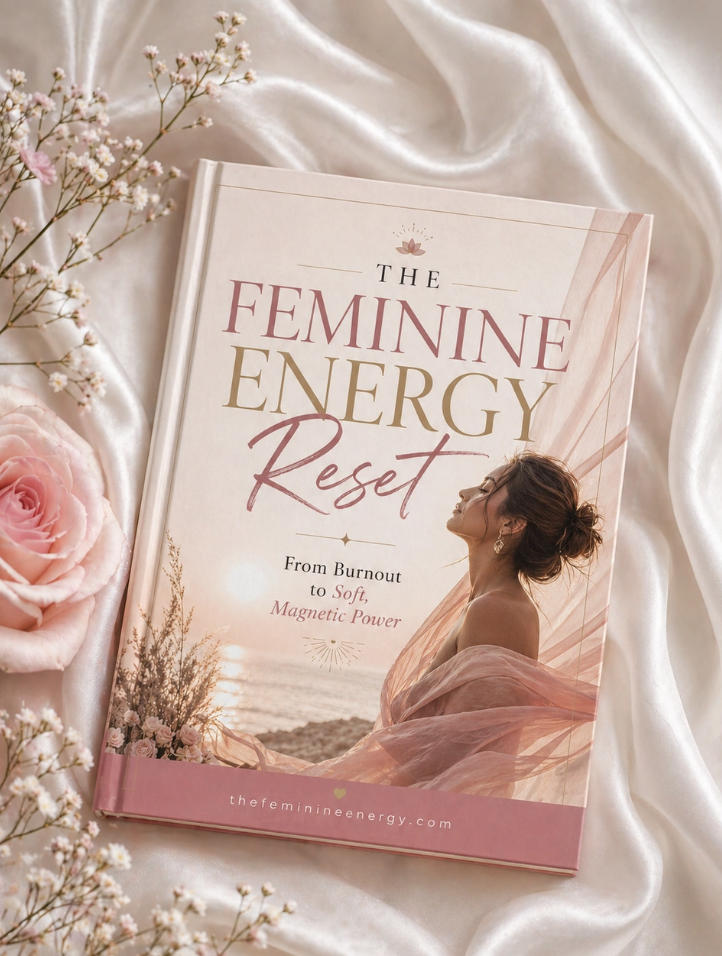
This book will help you leave survival mode behind, reconnect with your feminine energy, rebuild your self-worth from within, and create a life rooted in peace, joy, confidence, and authenticity.
You don’t need to become someone new.
You simply need to return to the woman you were always meant to be.